
2026-07-12 · Anthony Russo
How to Spot Hidden Water Damage in Older New York Buildings
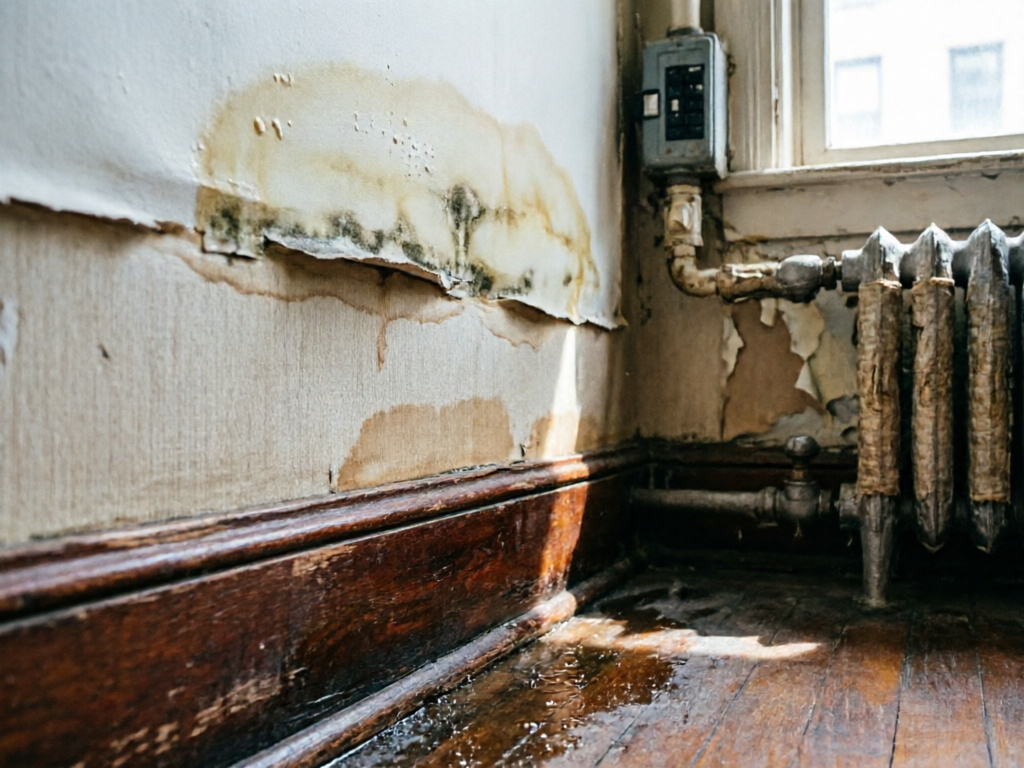
Hidden water damage in older New York buildings typically appears first as faint brown staining along ceiling seams or baseboards in pre-war construction, especially where pipes run behind plaster walls in Manhattan and the Upper East Side.
Check for soft spots in hardwood floors near bathrooms or kitchens by pressing firmly with your heel, as repeated freeze-thaw cycles from the local climate can push moisture through aged mortar joints around the Empire State Building area.
Musty smells near interior walls often signal trapped humidity from hot summers, particularly in structures close to Central Park where poor ventilation allows condensation to collect unseen.
Look for buckling wallpaper or paint that bubbles in linear patterns, which commonly traces back to slow leaks in cast-iron stacks common throughout New York County buildings.
During cold winters, inspect for ice crystal patterns on interior window sills that indicate exterior wall saturation, a frequent issue in Times Square-adjacent properties with shared walls.
If discoloration or odors persist, professional assessment through ceiling leak repair or mold remediation after water damage helps confirm the source without unnecessary demolition.
Contact New York NY Water Damage Restoration Pros during business hours Monday through Friday from 8am to 6pm or Saturday 9am to 2pm for targeted evaluation in your building.