
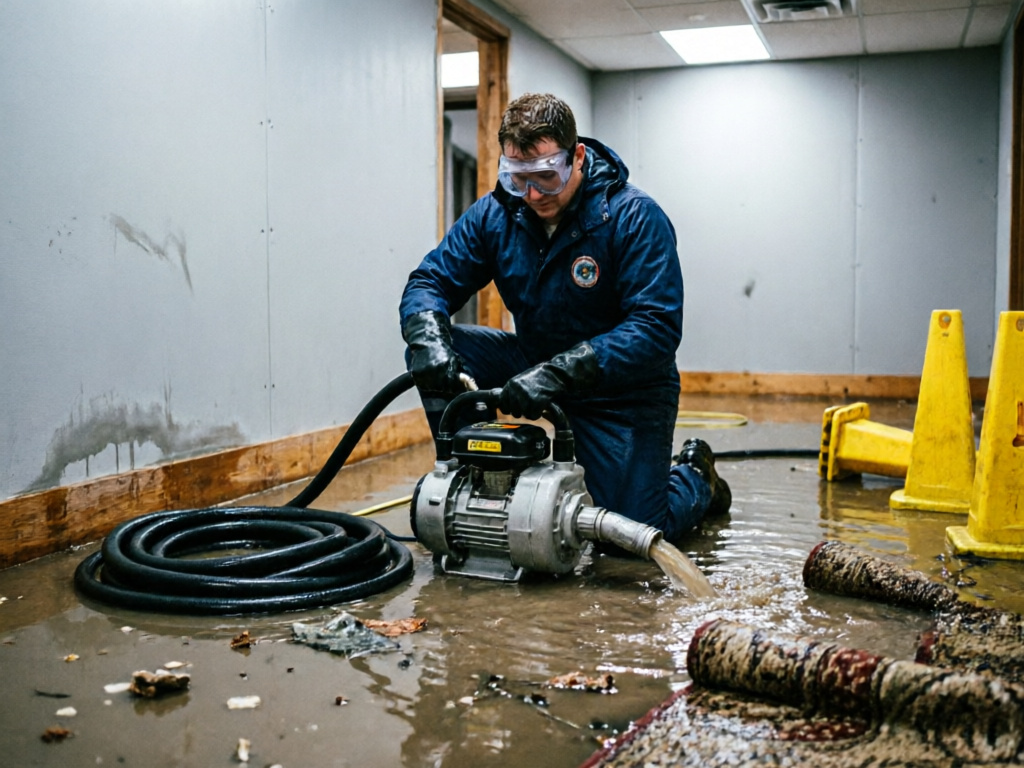
Buffalo's older brick and frame homes around Delaware Park and the Albright-Knox Art Gallery often experience sudden basement flooding when heavy lake-effect snow melts and enters aging foundation walls. Extraction teams work along I-90 and NY-33 corridors where highway runoff combines with frozen-pipe failures inside unheated attics typical of Erie County housing stock. Crews must stage equipment on narrow streets near Canalside and the Buffalo Niagara Medical Campus while protecting architectural details during rapid winter thaws.
Emergency Water Extraction in Buffalo — What We Handle
- ✓Lake-effect snow loads increase roof and pipe failures compared with drier parts of the state
- ✓Dense urban blocks around Buffalo City Hall limit large-equipment access during extractions
- ✓Older multi-unit buildings near the Medical Campus require careful handling to avoid disturbing historic finishes
Water does not follow business hours. A burst supply line in a Manhattan office tower at 2 AM or a suppression system discharge in a Queens warehouse on a Sunday releases thousands of gallons before any crew arrives if the response is slow. Our emergency water extraction teams are staged across the metro and dispatch on a 24/7 basis — no after-hours surcharge call-tree, just an answered phone and equipment moving toward your address.
Commercial properties in New York County present extraction challenges that residential jobs rarely do: elevator shafts carry water between floors, below-grade mechanical rooms flood before street-level staff notice, and finished lobbies along Fifth Avenue or midtown corridors need protection from pump vibration and hose drag. We use truck-mounted high-volume extraction for large commercial losses and portable submersible units for spaces where trucks cannot stage — including the tight service alleys behind Midtown buildings and the restricted loading docks common to older co-ops on the Upper East Side.
How It Works in Buffalo
- 1
24/7 Dispatch and ETA Confirmation
Call answered by a live dispatcher who confirms equipment type, crew size, and realistic arrival window based on your property address and access situation.
- 2
Source Control First
We locate and isolate the water source — shutting valves, capping lines, or coordinating with building maintenance — before extraction begins to prevent additional volume entering the space.
- 3
Category Assessment and Containment
Water is classified by contamination level. Category 2 and 3 water triggers immediate containment barriers before pumps start to protect unaffected areas and occupants.
- 4
High-Volume Extraction
Truck-mounted and portable units remove standing water simultaneously, prioritizing electrical rooms, load-bearing subfloor assemblies, and below-grade spaces.
- 5
Moisture Mapping and Handoff
Post-extraction readings document residual moisture at multiple depths across all materials. Report is handed to the drying crew and insurance carrier within hours of job completion.
Emergency Water Extraction Services We Offer in Buffalo
✓High-Rise Floor Water Extraction
Removes water migrating between floors in commercial towers and residential high-rises, with containment at affected levels to prevent spread through elevator shafts and mechanical chases.
✓Below-Grade and Mechanical Room Extraction
Clears flooding from basement boiler rooms, electrical vaults, and parking structures using submersible pumps rated for sediment-laden water without damaging adjacent equipment.
✓Category 3 Black Water Removal
Handles sewage backflow, storm drain overflow, and contaminated groundwater with full PPE, containment barriers, and compliant disposal — documented for health department records.
✓Suppression System Discharge Cleanup
Extracts fire suppression water from commercial spaces, distinguishing between clean system water and contaminated discharge when system history is unknown.
✓Hardwood and Specialty Floor Extraction
Uses low-profile wands and moisture-controlled extraction to pull water from under tongue-and-groove flooring without full demolition when saturation has not yet reached the subfloor.
Serving All of Buffalo
We regularly handle emergency water extraction jobs near:
- 📍Buffalo City Hall
- 📍Albright-Knox Art Gallery
- 📍Canalside
- 📍Delaware Park
Emergency Water Extraction Pricing in Buffalo
Commercial extraction is priced by affected square footage, water category, and number of floors involved. Written scope provided on site before work begins. 24/7 emergency dispatch — no business-hours restriction.
Want the full picture of this service? See our Emergency Water Extraction page, or everything we do in Buffalo, NY.